ChronoQuest — Market Discovery & Generative Research for EdTech Startup
Empowering students to explore historical causation through engaging timelines
The Product: ChronoQuest is an award-winning EdTech platform that transforms how 6th–12th grade students analyze complex historical events through interactive global and regional timelines, fostering critical thinking and inquiry-based learning aligned with C3 Dimension 2 standards.
My Role: Lead UX Researcher & Co-Founder—conducting generative market research, defining user needs through competitive analysis and user interviews, and translating insights into product strategy and design direction.
Project Snapshot
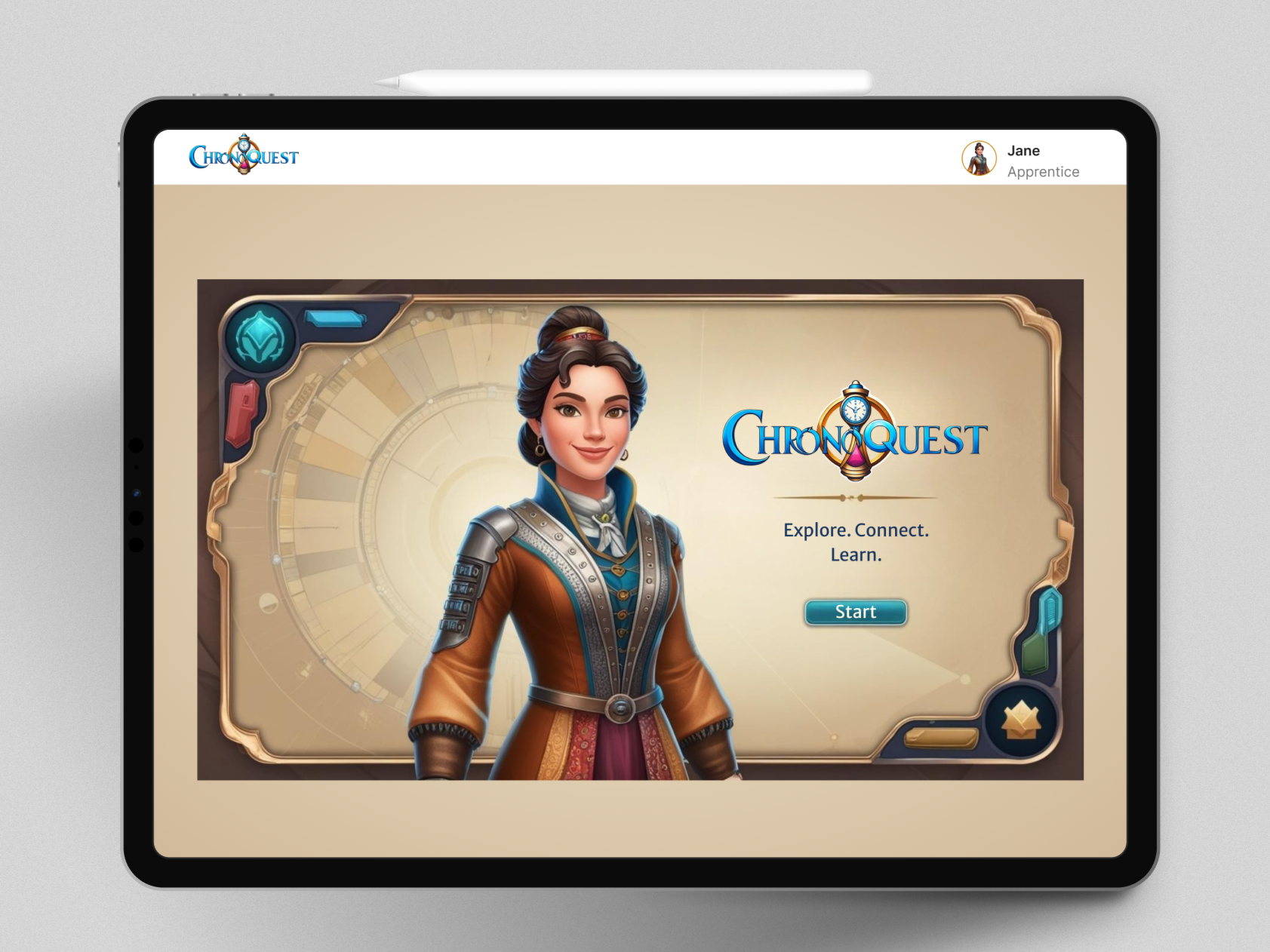
Context: This evolving project won 1st place at the NYEdTech Hackathon and was provided the opportunity to advance to the EdStart Shark Tank.
Industry: EdTech / K-12 History Education
Team: 5 members (Developers, Educators, UX)
Tools: Sketch, Figma, Zoom
Duration: Ongoing (Initial Hackathon: 1 month)
The Challenge
Beyond Linear History
Students struggle to grasp the interconnectedness of historical events, leading to disengagement and a superficial understanding of cause and effect. Traditional linear teaching methods fail to foster the critical thinking skills needed for deep historical inquiry.
The Solution
Interactive, Inquiry-Based Learning
ChronoQuest transforms history education through dynamic regional and global timelines that enable students to:
Explore simultaneous events across regions
Layer information to reveal connections
Visually trace causes and consequences
Move beyond rote memorization to genuine analysis
Project Goals:
Analytical Skills: Increase student analytical abilities by 30% (measured through post-usage assessments)
Engagement: Drive 40% increase in engagement via interactive features
Standards Alignment: Full alignment with C3 Dimension 2 standards
Understanding Our Users: Provisional Personas
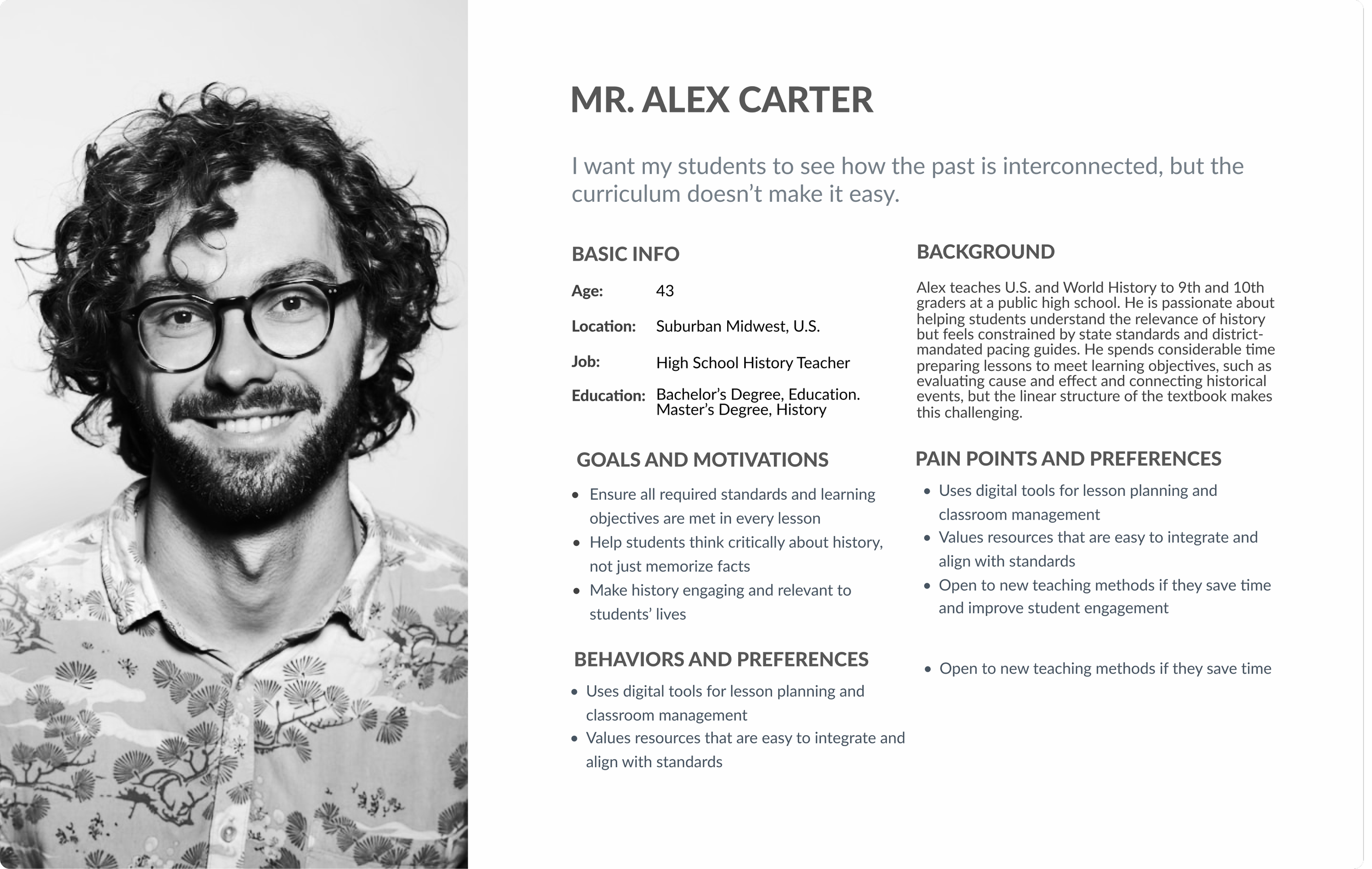
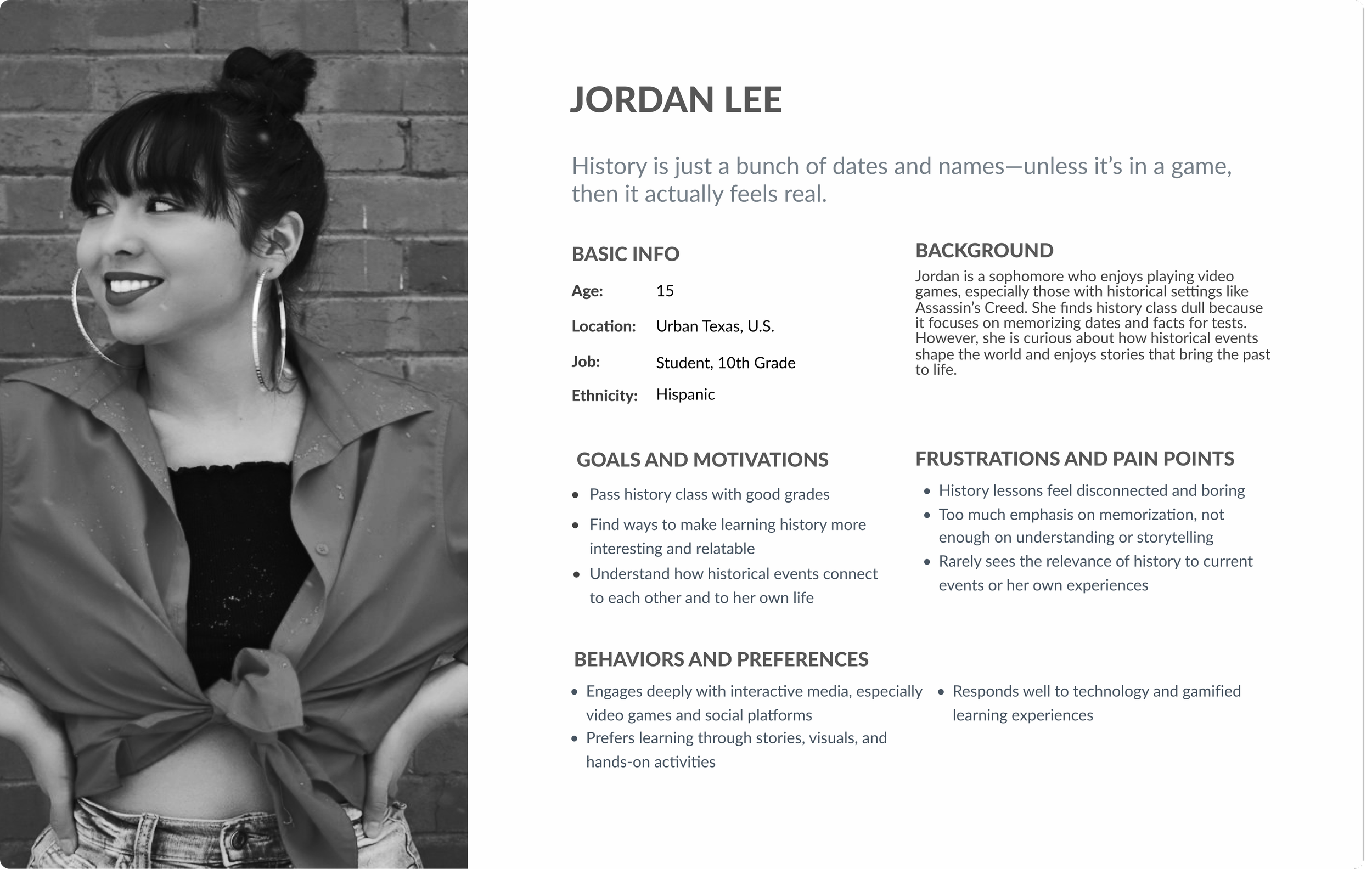
Methodology: Developed data-driven personas based on U.S. demographic data, education statistics, and teaching challenge insights.
Key Personas:
Teachers (e.g., Mr. Alex Carter): Middle/high school history educators
Students (e.g., Jordan Lee): 6th–12th graders with varied learning preferences
Impact: Guided initial feature prioritization around user goals, frustrations, and learning needs, ensuring user-centric early design decisions.
Competitive Landscape Analysis
Methodology: Two-phase research approach:
Market Gap Analysis: Evaluated EdTech platforms for engagement, communication, and digital history exploration (ClassDojo, Nearpod, ChronoZoom, Google Arts & Culture, Mission US, iCivics)
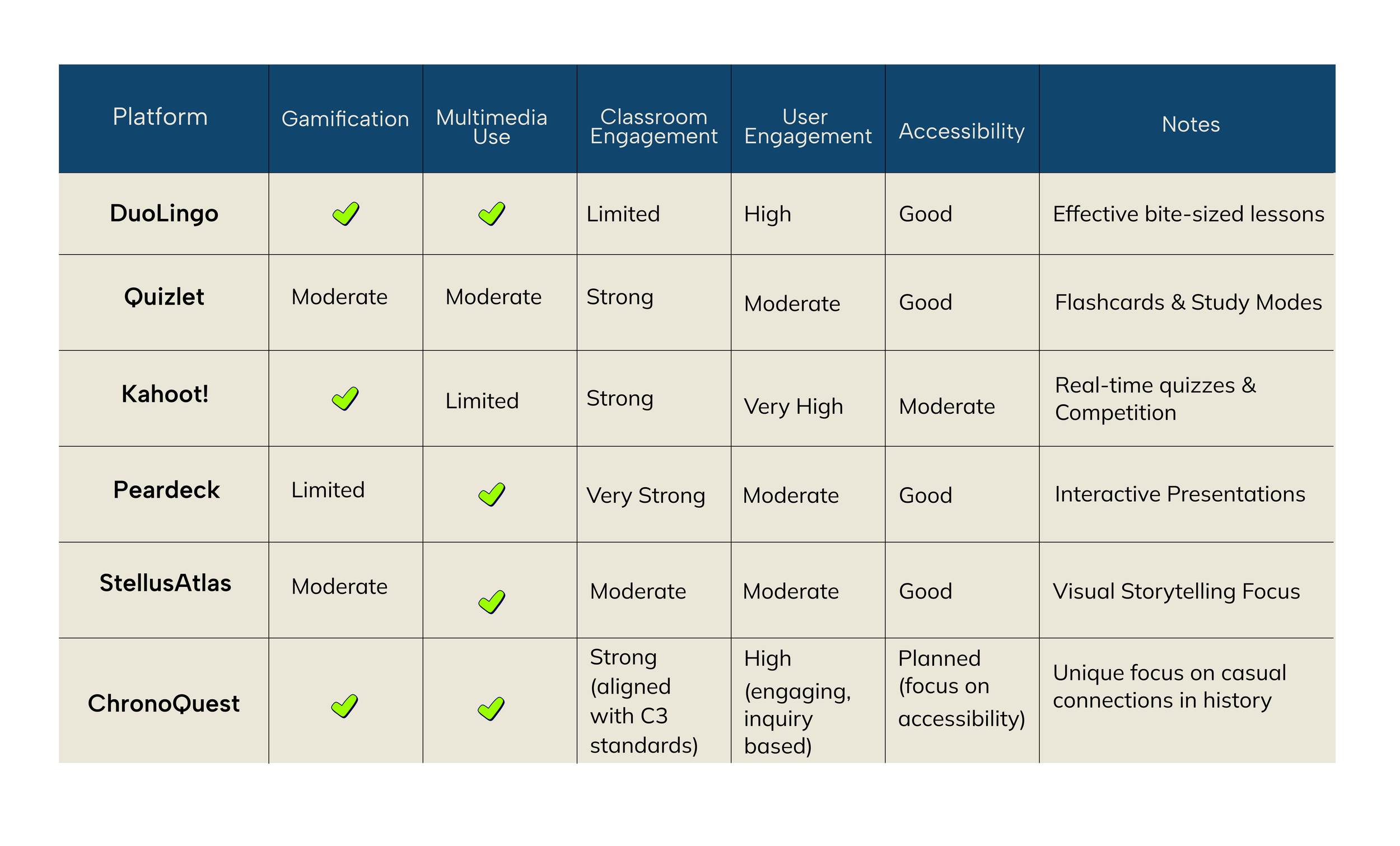
Design Benchmarking: Analyzed leading EdTech products for best practices in gamification, UI, and classroom integration (Duolingo, Quizlet, Kahoot!, Peardeck, StellusAtlas)
Key Insights:
No direct competitor addresses causal history exploration
Interactive multimedia, real-time updates, and gamification drive engagement
Dynamic storytelling enhances learning retention
Strategic Impact: Informed our approach to blend proven engagement tactics with unique causal exploration focus, positioning ChronoQuest as innovative yet user-centered.
Design Process
Structuring the Experience: Wireframes & Iteration
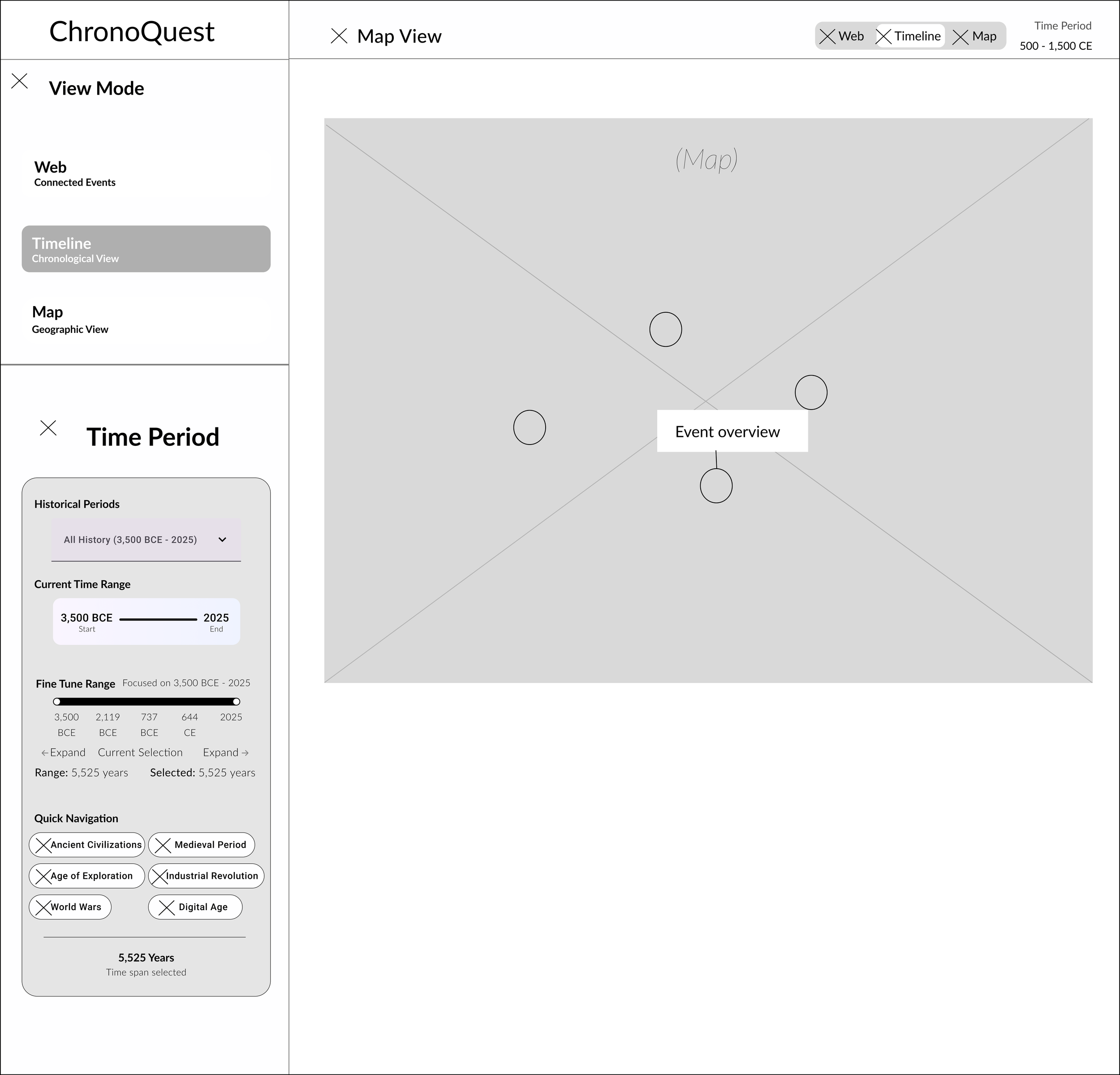
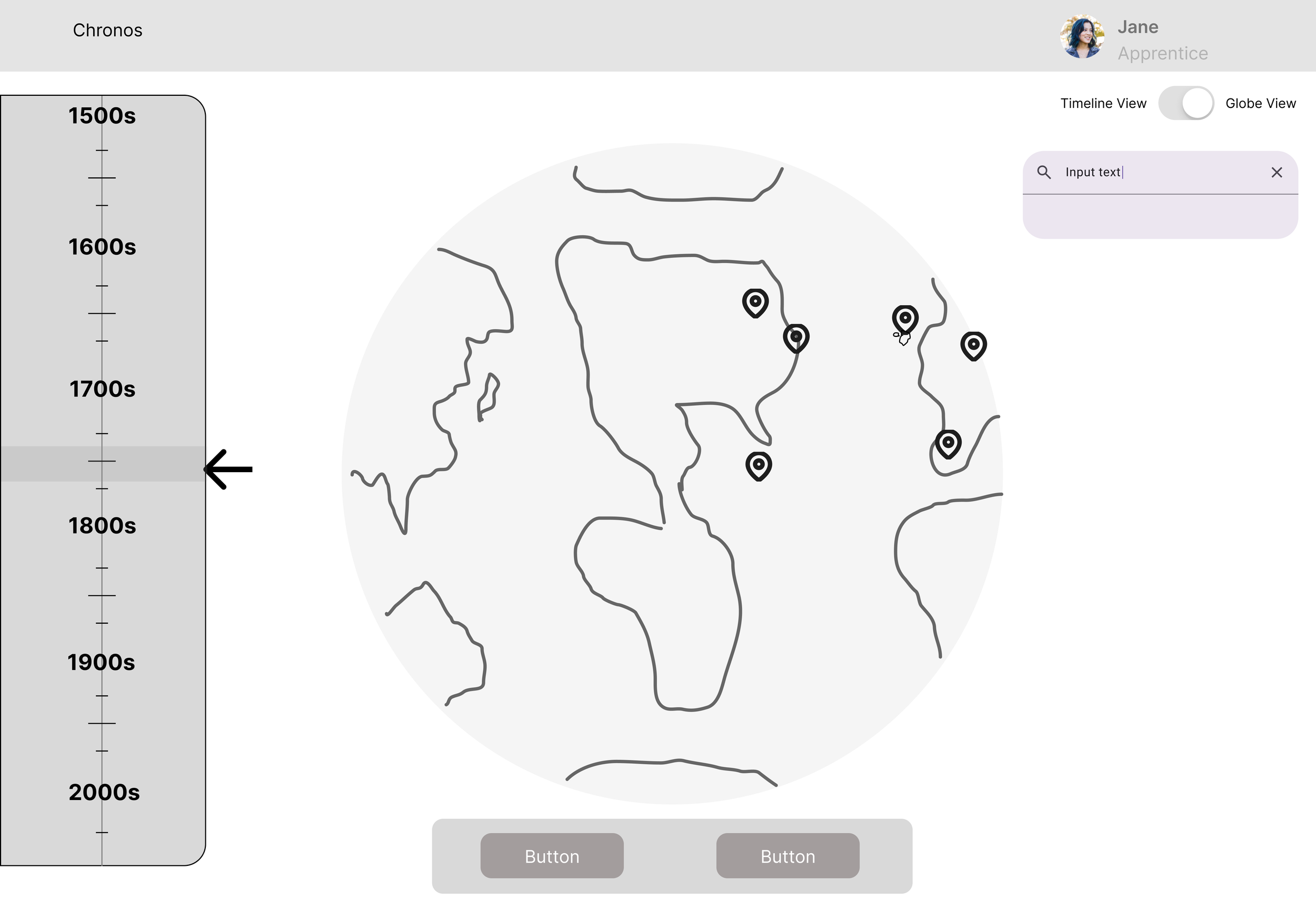
Initial Wireframes: Crafted low-fidelity wireframes to establish core features and user flow (timeline navigation, event details, interactive elements).
Iterative Refinement: Through collaborative team discussions and design critiques, we identified gaps in the initial approach. Multiple rounds of iteration addressed feedback on navigation clarity, information hierarchy, and the placement of interactive elements.
Impact: The final wireframes differed significantly from initial concepts—reflecting a more refined understanding of user needs and technical constraints. This iterative approach ensured team alignment and a stronger UX foundation.
Visual Design: Thematic Exploration
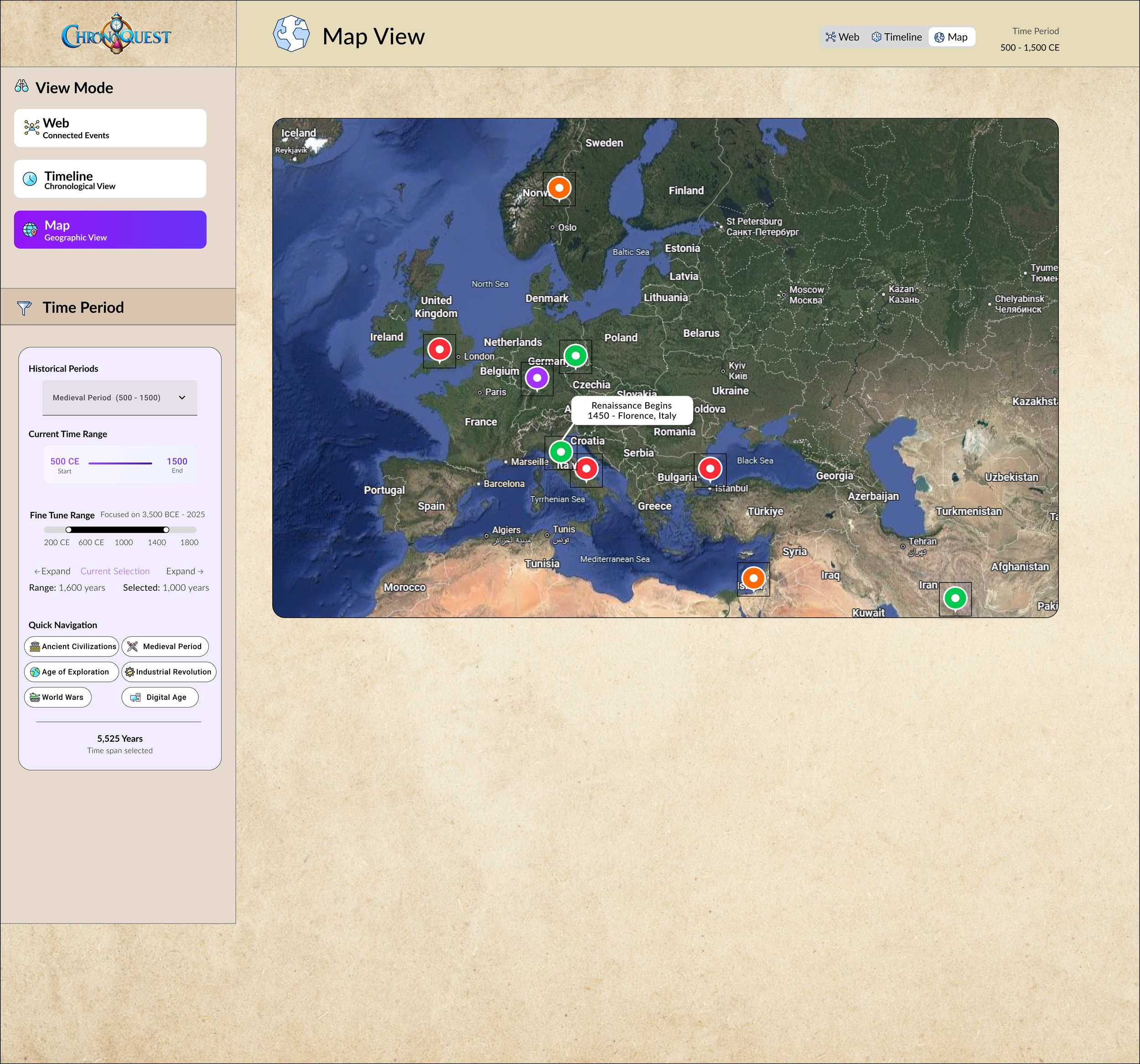
Process: Explored thematic concepts to enhance engagement while maintaining usability. Selected "Steampunk time machine" theme for its balance of visual interest and functionality—incorporating subtle elements (gears, dials) that immerse without distracting.
Key Screens Designed:
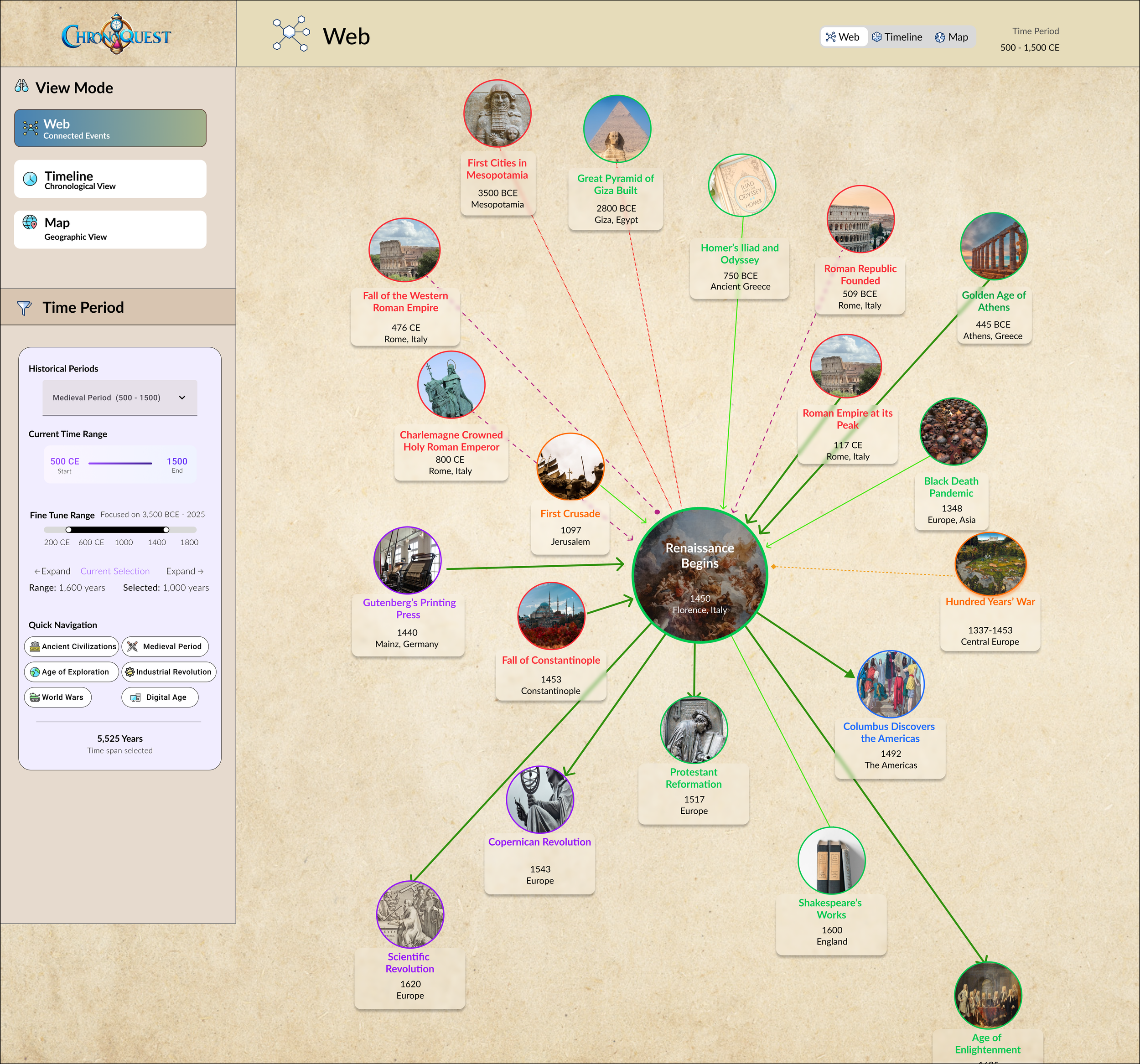
Global Screen: Visualizing interconnected regional and global events
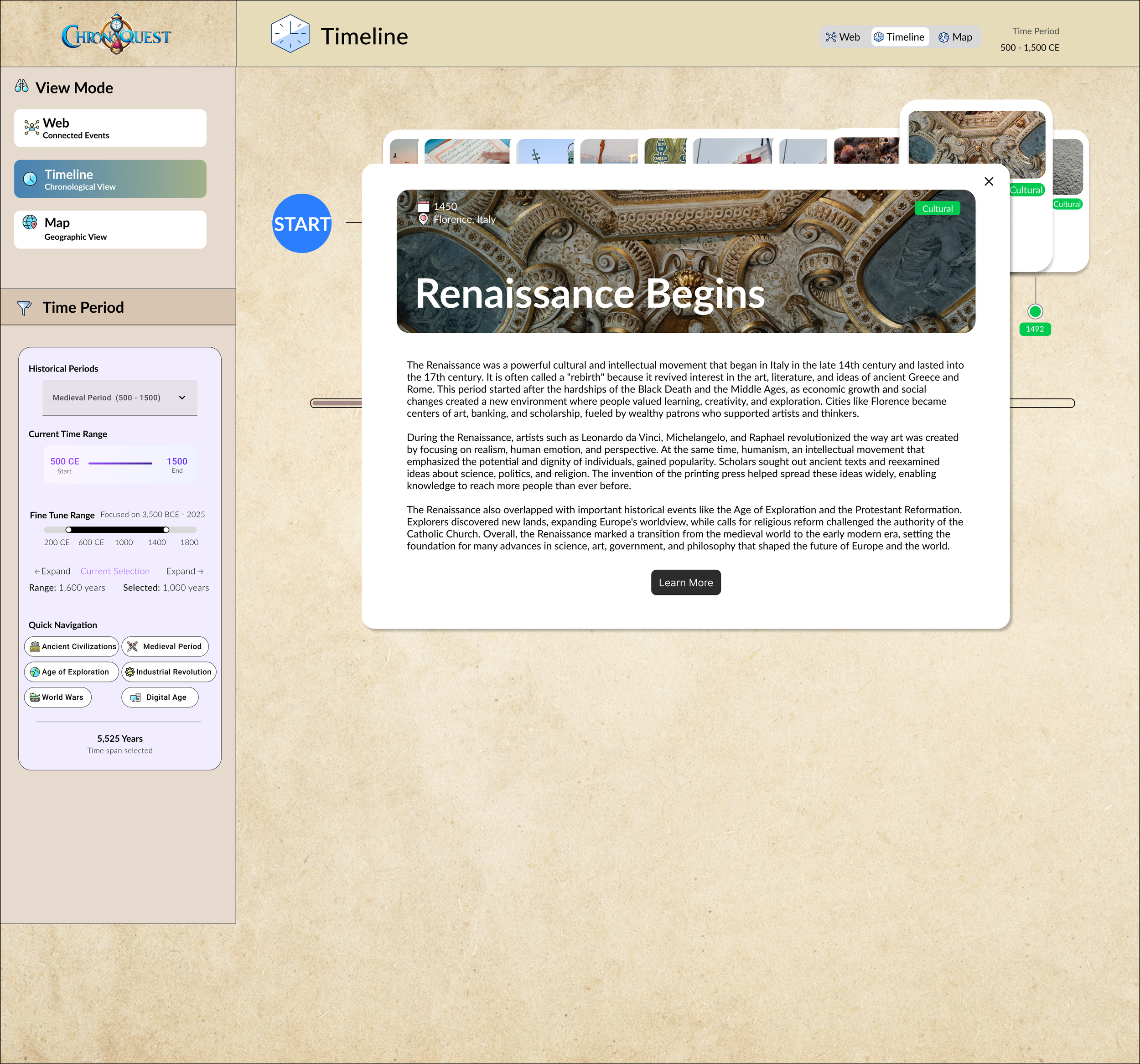
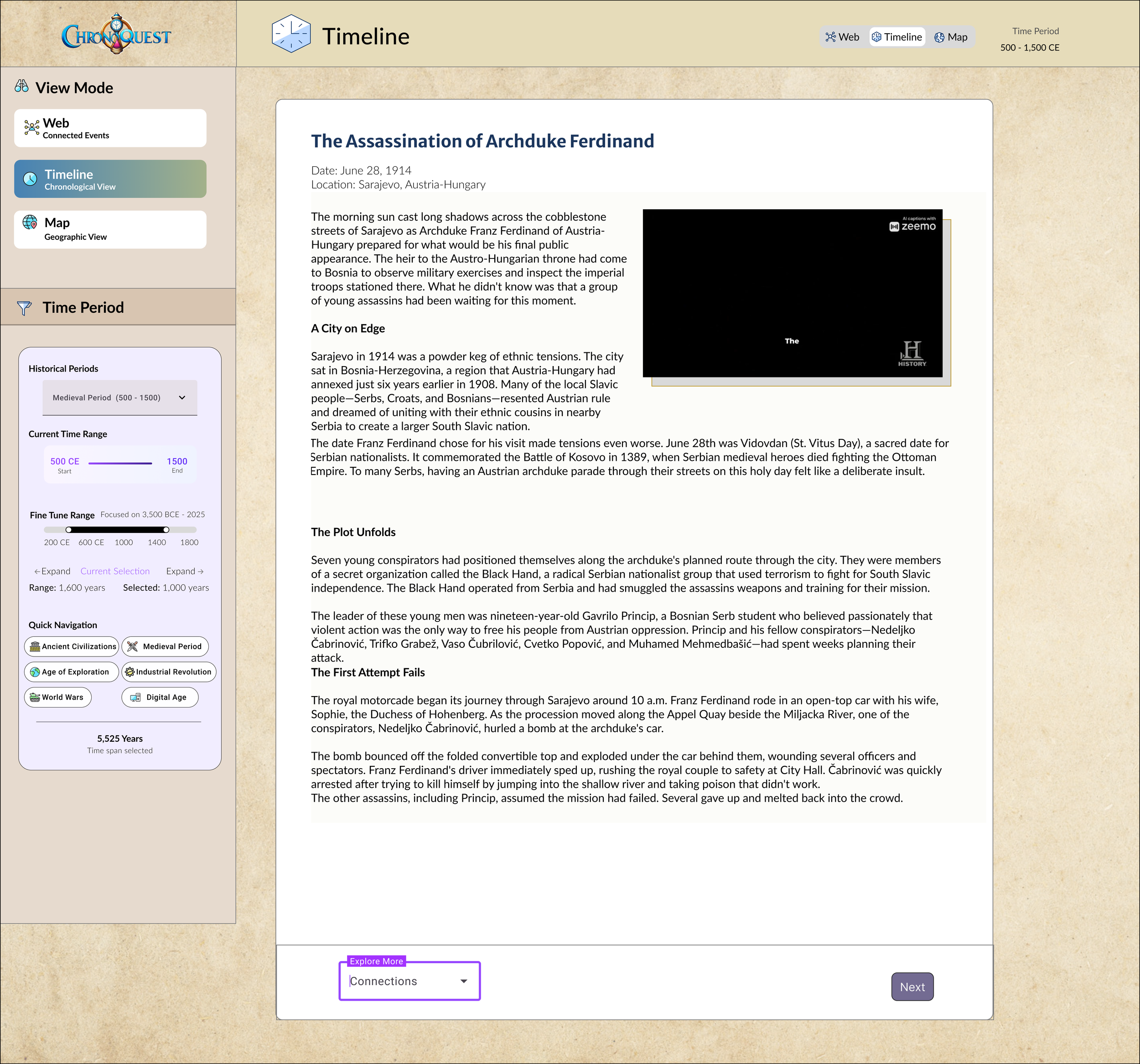
Event Detail Screen: Deep dive into specific events with historical context
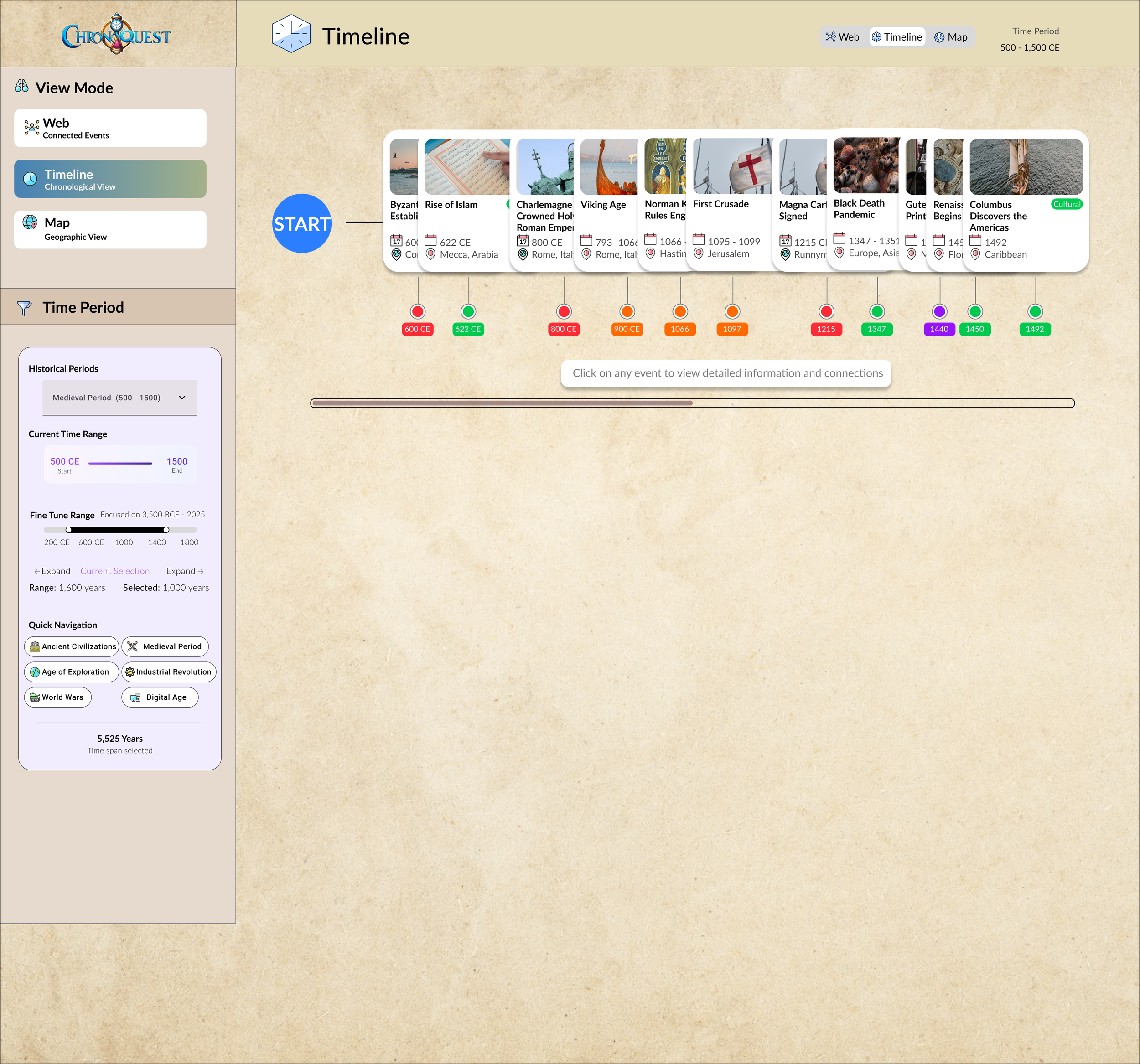
Web Timeline / Linear Timeline Screens: Multiple exploration views
Daily Quest Lesson: Gamified learning engagement
ChronoHub: Badges and leaderboard for student motivation
Next Steps & Future Impact
Planned Research Validation
To strengthen product-market fit before EdStart Shark Tank, our research roadmap includes:
Qualitative Research:
User Interviews: Deep understanding of student and teacher needs, motivations, and pain points
Co-Design with Students: Direct involvement in the design process for ownership and immediate feedback
User Journey Mapping: Identifying opportunities for seamless learning experiences
Quantitative Research:
Comprehensive Surveys: Gathering broad insights from teachers and students
Iterative Testing:
Usability Testing: Testing prototypes with target users to identify friction points and optimize usability
Persona Refinement: Validating and refining personas with primary research
Strategic Impact: These steps are crucial to validate ChronoQuest's value proposition, secure startup funding, and achieve broader market impact.
Ongoing Research Questions:
How might gamification elements (time detective role-play, evidence collection) enhance engagement without compromising learning depth?
What role should student agency play in constructing historical narratives?
How do we balance entertainment value with rigorous historical inquiry?
Project Impact
Awards & Recognition:
1st Place Winner: NYEdTech Hackathon
Advancing to: EdStart Shark Tank
What I Learned: This ongoing project reinforces the importance of grounding EdTech design in both educational standards and real user needs. By combining competitive insights with provisional personas, we created a strong foundation for an innovative product—one that now requires deep user validation to reach its full potential.